From Web Novel to Short Drama: What Changes on Screen
One fictional scene, two ways to feel it: what happens when an inner thought becomes an action we can see?
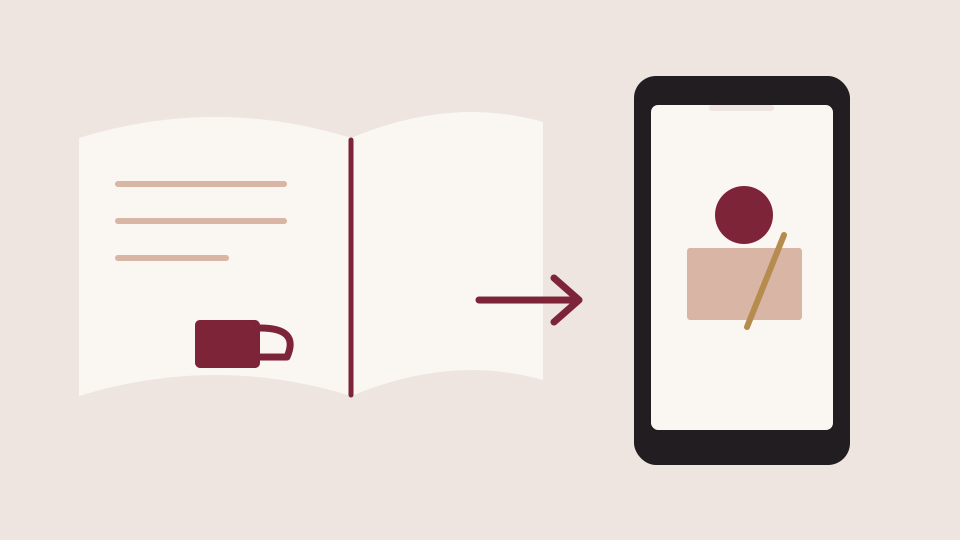
A page can tell us what a character thinks while they do almost nothing. A screen asks us to notice what they do, say, conceal, or fail to conceal. That change can make the same moment feel faster, quieter, funnier, or more exposed.
Turning a web-novel scene into a short-drama scene is therefore not just a matter of removing description. The interesting question is where the information goes. Does it become a gesture? A conversation? Something we must wait longer to understand?
One small scene, two ways in
In a few sentences, the prose tells us Jo's plan, the feeling that interrupts it, and the small lie she uses to delay an answer. We know more than her father does. The pen becomes touching because we already understand why she will not use it.
This version keeps the same practical decision and the same emotional obstacle. It gives us less certainty about Jo's exact thoughts. We infer them from the unused pen, the familiar drink, and the answer that is not quite an answer.
The audience does some of the travelling
Neither version is a complete drama, and the screen version is not inherently superior. Prose can make Jo's divided loyalties immediately intimate. The visual version lets us discover the hesitation alongside her father, although we may notice the pen before he does.
That difference changes the tension. On the page, we might wonder when she will admit what we already know. On screen, we may spend longer wondering what the hesitation means. If later dialogue tells us she wanted to leave, the earlier image can return with more weight.
Voiceover could preserve the inner account. It can work when it adds a distinct perspective, humour, or an unreliable explanation. If it merely narrates every visible movement, the scene has two channels saying the same thing. We hear that Jo cannot decide while watching her fail to decide, without learning much more.
What a shorter scene might keep
A compact screen version may lose the bus stop and the earlier promise to herself. That removes context, so something else needs to carry the decision. The renewal form gives the moment a visible deadline. The keys suggest the relationship between the shop and the family. Her father's offered pen shows that he expects an answer.
Without those details, two people drinking tea may look peaceful rather than tense. Speed does not mean stripping out every ordinary object. It means selecting objects and actions that let us follow the problem without a paragraph of explanation.
Dialogue also changes jobs. “I have been thinking about my future” gives us a broad announcement. “Tea first?” gives us an avoidance we can recognise. A later direct conversation may still be necessary. An expressive pause cannot settle an argument the characters eventually need to have.
Different losses, different pleasures
On the page, we can remain inside Jo's embarrassment for as long as the prose makes that experience interesting. On screen, the actor's timing, the space between the cups, and whether the father notices her pocket can invite a different kind of attention.
What should survive is the meaningful choice. If an adaptation replaces Jo's difficult decision with a stranger announcing that the shop has already been sold, the scene may become more dramatic while telling a different story. That can be a deliberate choice, but it is more than compression.
What to notice as a viewer
Ask what the scene makes available to you now, and what it leaves you to infer. A successful change of medium does not have to reproduce every sentence. It can preserve the pressure and character while finding a new way to make them visible. The pen matters in both versions; the pleasure is discovering why we notice it differently.