Why Short Dramas Get to the Conflict So Fast
A quick opening earns our attention when it gives a character a meaningful choice—not just another shock.

That kind of opening gives a short drama something useful: a question with a person attached. Does she leave, challenge the insult, or reveal that she was invited for a different reason? The attraction is not simply that events happen quickly. It is that the audience has something specific to care about before it has a family tree to memorise.
An argument before a biography
The scene supplies a place, a practical task, and an immediate clash. It also gives Leah a choice. She can argue in front of the client, disappear into the kitchen, or produce the contract she has kept in her bag. Each option tells us something about her. We do not need to know where she went to school to understand why that missing name matters.
Now imagine a different opening. Leah wakes up, travels across town, explains her business to a friend, and remembers how she met her former partner. Only after that do we reach the menu. This version might give the conflict emotional texture. It might also make us wait through information whose importance we cannot yet judge.
Neither approach is automatically better. The first asks us to learn through pressure. The second asks us to invest before the pressure arrives. The question is whether the introduction earns the patience it requests.
Fast is a relationship between events
An opening can contain a slammed door, a cancelled wedding, and a mysterious phone call while still feeling oddly slow. If none of those events changes what the central character can do, they become noise around a stationary person.
In Leah's scene, the ringing timer can matter. Perhaps a dish will spoil while the two partners fight over credit. Leah must decide whether protecting her work matters more than winning the argument in public. The deadline creates a cost; it does not merely make the soundtrack more urgent.
Compare that with a timer that rings for no reason and is forgotten in the next shot. The sound briefly raises our pulse, but the scene has borrowed urgency it never pays back. It is reasonable to enjoy the excitement. It is also reasonable to notice when excitement keeps replacing consequence.
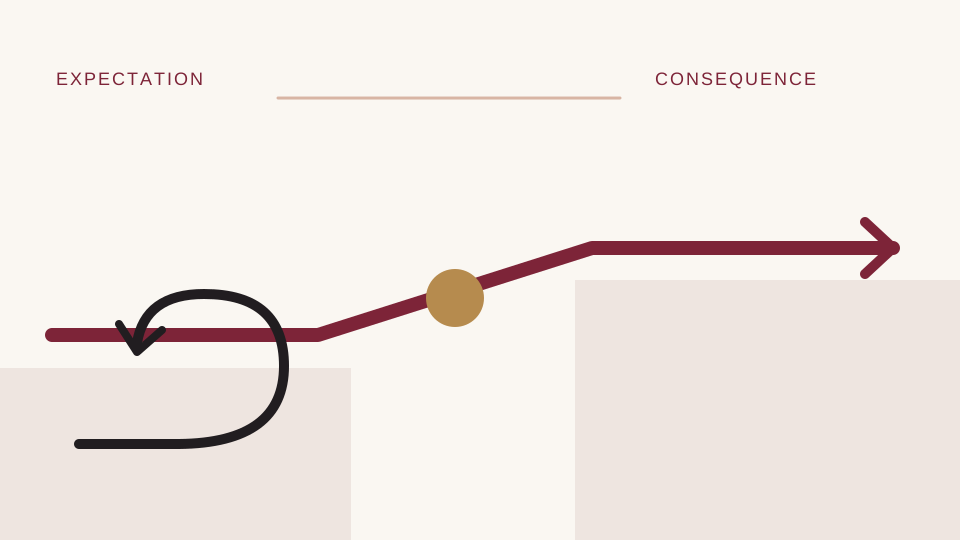
A useful opening gives us enough to form an expectation, then lets the next action test it. Leah looks prepared to explode. Instead she takes off her coat and saves the food. We can now wonder whether she is frightened, strategic, or simply unwilling to punish the guests for somebody else's behaviour. One choice has opened several interesting questions.
What gets lost when everything happens at once
Speed can make a character look thinner than the situation deserves. If Leah is betrayed, accused of theft, dismissed by the client, and rescued by a wealthy stranger in the opening minute, her own priorities may never become visible. The story has given her experiences without giving her much room to respond.
This is especially frustrating when later episodes ask us to admire her resourcefulness. We need to have seen some resourcefulness, even in a small action. Does she protect an employee's wages? Check the oven herself? Ask for a copy of the altered menu rather than accepting somebody else's account? A brief decision can do more character work than a long speech announcing that she is strong.
Quiet information has value too. The flowers in our first scene could be for someone who once helped her. That detail would make arriving with them more than an attractive image. A quick opening does not have to remove tenderness, history, or ordinary life. It needs to choose which of those details can carry weight right now.
A little confusion can invite us in
Not knowing everything is part of the pleasure. We may be curious about the former partner's confidence or the client's strange reaction. The important distinction is between uncertainty about an answer and uncertainty about the basic situation.
If we know Leah wants to keep the job, a hidden clause in the contract is a promising mystery. If we cannot tell whether she owns the business, works for it, or has wandered into the wrong reception, the same clause may only add confusion. We have no stable question for it to answer.
One practical test is to pause after the opening and finish two sentences: this person wants something, and this particular obstacle is in the way. The answer can be provisional. It should not require inventing most of the scene yourself. Clear stakes give later surprises a shape to disrupt.
Watch the next scene, not just the first hook
The opening is an invitation, not proof that the whole drama will work. A satisfying follow-up changes the situation it introduced. Leah might secure the kitchen but lose the client's trust. She might win credit and realise that keeping the partnership would cost more than leaving it. Either development gives the next episode something new to handle.
A less satisfying follow-up repeats the same insult with a larger audience. Repetition can intensify pressure once or twice. Eventually it stops revealing anything. If every episode returns Leah to the same place by the same method, the opening's efficiency becomes a loop.
There is no need to turn watching into homework. Notice how you feel when an episode ends. Are you curious about what someone will choose, or merely waiting for a conversation the story keeps refusing to have? That small difference often explains why two equally fast dramas leave very different impressions.
The useful kind of hurry
The best reason to get to conflict quickly is to get to a meaningful choice quickly. A gripping opening can introduce a person through what they protect, risk, or refuse. Background can arrive later, when it changes our understanding of the action.
A fast start earns attention when it makes the next moment matter. If it only supplies more shocks, speed becomes a substitute for a story. We can enjoy an outrageous entrance and still expect the drama to take us somewhere after the door slams.